Graduating from university can feel like the beginning of a new chapter, but for many graduates, the first major decision is not simply which job to apply for. It is deciding where in the world to build that career.
International jobs can give graduates the opportunity to work with people from different backgrounds, gain experience in unfamiliar markets, develop professional skills, and build a career that is not limited to one country. At the same time, applying for work overseas involves additional considerations that do not usually arise with a local job search, including work authorization, employer requirements, qualifications, language, relocation costs, and cultural differences.
The good news is that graduates do not need to have their entire international career mapped out before starting. A more practical approach is to identify suitable career fields, research realistic destinations, understand work-permit requirements, and apply strategically rather than sending the same application to hundreds of employers.
This guide explains how recent graduates can begin searching for international employment, which factors deserve attention, how to prepare application materials, and how to avoid common mistakes when looking for legitimate opportunities abroad.
What Counts as an International Job?
An international job is broadly a professional position that allows someone to work in a country other than their current country of residence or citizenship. These opportunities can range from graduate-level positions with multinational companies to roles at universities, research organizations, international institutions, technology companies, hospitals, engineering firms, and other employers.
Not every international position is designed specifically for foreign graduates. Some employers may only consider candidates who already have permission to work in the country. Others may be willing to hire qualified international candidates and support the relevant immigration process.
This distinction is important.
A job advertised online may be open to applications from people around the world, but that does not automatically mean the employer provides visa sponsorship. Graduates should therefore treat work authorization and sponsorship as separate questions from basic job eligibility.
Start With Your Career Profile
Before choosing a country, start by understanding what you can offer an employer.
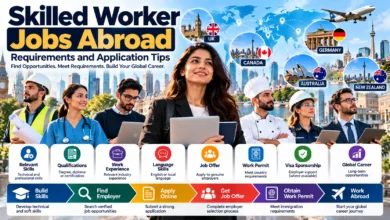
A graduate’s profile usually includes four important elements:
- Academic qualification
- Technical or professional skills
- Practical experience
- Communication and workplace skills
Your degree does not necessarily determine your entire career. For example, a business graduate may pursue roles in operations, sales, marketing, administration, consulting, or project coordination. A computer science graduate may consider software development, cybersecurity, data-related positions, IT support, or cloud technologies.
Internships, university projects, volunteer work, freelance projects, laboratory work, and part-time employment can also strengthen a graduate application.
Identify Your Most Marketable Skills
Make a list of skills you can demonstrate rather than simply claiming.
For example:
Technical skills:
Programming, data analysis, accounting software, engineering tools, laboratory techniques, graphic design, or digital marketing.
Professional skills:
Research, project coordination, customer service, documentation, presentation, teamwork, and problem-solving.
Language skills:
English and any additional languages you can use professionally.
Then compare those skills with the requirements appearing repeatedly in international vacancies within your chosen field.
Choose the Destination After Researching the Career Market
One of the most common mistakes graduates make is choosing a country first and searching for any job afterward.
A better strategy is to connect the destination with your profession.
Ask:
- Is there demand for my type of work?
- Are graduates or entry-level candidates considered?
- What qualifications are normally expected?
- Is local professional registration required?
- What language is used in the workplace?
- Can international candidates legally work in this sector?
- What immigration routes may be available?
- What is the realistic cost of living?
A country can appear attractive from a general career perspective while being difficult for a particular profession.
For regulated occupations such as certain healthcare, legal, education, and professional roles, recognition of qualifications may be especially important. In other fields, employers may focus more heavily on demonstrable skills and experience.
Countries Are Not the Only Factor
When researching international employment, think about the employer, industry, city, and immigration route as well as the country.
For example, a graduate interested in technology might compare multinational employers, technology startups, research institutions, and consulting companies rather than simply searching for “jobs abroad.”
Likewise, an engineering graduate may find that opportunities vary considerably between infrastructure, manufacturing, energy, construction, and engineering consultancy.
This approach produces a more focused job search and can prevent graduates from applying randomly.
Where Graduates Can Search for International Jobs
There is no single website that contains every legitimate international opportunity. A combination of sources is usually more effective.
Employer Career Pages
Start with companies you genuinely want to work for.
Large employers often publish vacancies directly through their career websites. These pages can provide information about location, requirements, employment arrangements, and application procedures.
Employer websites are particularly useful because graduates can verify whether a vacancy actually exists before submitting personal information.
Professional Job Platforms
Established professional employment platforms can help graduates identify vacancies across multiple countries.
Use filters for:
- Country
- City
- Experience level
- Industry
- Job function
- Remote or on-site work
- Employment type
Do not rely solely on the search title. Read the full vacancy description to determine whether international applicants are realistically eligible.
Universities and Research Institutions
Graduates interested in research, science, education, engineering, medicine, or academic careers should also monitor university and research-institution vacancy pages.
Some positions may be connected to specific research projects, laboratories, departments, or funding programs.
International Organizations
International organizations can provide another route for graduates, although eligibility varies considerably by position and organization.
Applicants should always read the official vacancy announcement rather than assuming that a particular degree automatically qualifies them.
Understand Work Authorization Before Applying
One of the most important differences between a domestic and international job search is the legal right to work.
A graduate may be academically qualified for a position but still unable to accept it without appropriate authorization.
Depending on the destination and circumstances, possible routes can include:
- Employer-sponsored work authorization
- Graduate or post-study work routes
- Skilled-worker immigration programs
- Youth or mobility schemes where applicable
- Country-specific employment permits
- Transfers through an international employer
Rules differ significantly between countries and can change over time.
For this reason, immigration information should be checked through the relevant government authority or official immigration service rather than relying solely on social media posts or recruitment websites.
For a broader explanation of employer sponsorship, eligibility and important checks, read our guide to International Jobs With Visa Sponsorship.
Do Not Assume “Visa Sponsorship” From a Job Title
Search results sometimes use phrases such as “international jobs,” “jobs abroad,” or “visa sponsorship jobs.”
Those phrases alone are not proof that an employer will sponsor a candidate.
Look for clear information in the official vacancy or employer documentation. If sponsorship is not explained, research the employer and the applicable immigration rules before making assumptions.
Build an International-Ready Resume
Your resume should make it easy for an employer to understand what you can contribute.
For recent graduates, a strong resume does not have to be long. It should instead prioritize relevant information.
A useful structure can include:
Contact information
Use professional contact details.
Professional profile
Briefly explain your field, strongest skills, and career direction.
Education
List relevant degrees, institutions, and important academic achievements.
Experience
Include internships, placements, part-time work, projects, volunteering, and relevant freelance work.
Skills
Focus on skills relevant to the position.
Languages
Mention languages and proficiency honestly.
Projects or research
Include significant university or independent projects when they demonstrate relevant capabilities.
Avoid adding information simply because it makes the resume longer.
Adapt Your Application to Each Employer
Sending one generic resume to every international employer is rarely an effective strategy.
Instead, identify what the employer actually needs.
If a vacancy emphasizes data analysis, highlight relevant analytical projects and tools. If the role involves customer-facing work, emphasize communication and service experience. If it is research-oriented, give greater attention to research methods, publications where applicable, academic projects, or laboratory experience.
A short, relevant application can be stronger than a long application containing unrelated achievements.
Build Experience Before Moving Abroad
Some graduates believe they must immediately secure a full-time overseas position after graduation.
That is not always necessary.
If direct international employment proves difficult, consider building experience through:
- Internships
- Graduate trainee programs
- Local employment with an international company
- Research assistant opportunities
- Freelance projects
- Professional certifications
- Remote work
- Volunteer projects relevant to your field
Experience can make a future international application more competitive.
Working for a multinational organization in your home country can also expose you to international teams and processes and may create future opportunities within the same organization.
Networking Can Open Doors
International career development is not only about vacancy websites.
Professional networking can help graduates learn how hiring works in different markets and discover opportunities that they might otherwise miss.
Start by connecting with:
- University alumni
- Professionals in your field
- Recruiters
- Industry associations
- Researchers
- Employees of companies you are targeting
Networking should not mean repeatedly asking strangers for jobs.
Instead, focus on professional conversations, learning about industries, sharing relevant work, and developing genuine connections.
Be Careful With Overseas Recruitment Scams
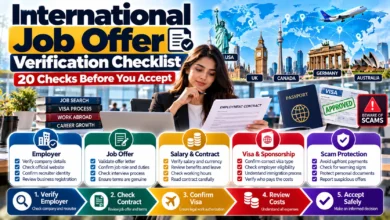
International job seekers can be attractive targets for fraudulent recruiters.
Be particularly cautious when someone:
- Guarantees a job or visa
- Requests large upfront recruitment fees
- Uses an unverifiable company identity
- Offers a salary that seems unrealistic for the position
- Pressures you to make an immediate payment
- Requests sensitive financial information unnecessarily
- Sends an application link unrelated to the employer
- Claims that a visa is guaranteed if you pay a fee
Verify vacancies through the employer’s official website whenever possible.
A legitimate job application should not depend on trusting an unknown person simply because they claim to be a recruiter.
A Practical 30-Day Starting Plan
If you are unsure where to begin, break the process into manageable stages.
Week 1: Define Your Direction
Choose two or three career fields that match your education and skills.
Research typical job titles and identify the qualifications employers commonly request.
Week 2: Research Destinations
Select several countries or regions where your profession has relevant opportunities.
Compare employment requirements, language expectations, professional recognition, and official immigration information.
Week 3: Prepare Your Applications
Update your resume and create a flexible cover-letter framework.
Then customize your applications for individual vacancies.
Week 4: Start a Focused Search
Create a list of suitable employers and positions.
Track:
| Item | What to Record |
|---|---|
| Employer | Company or organization name |
| Position | Exact job title |
| Country | Job location |
| Requirements | Key qualifications |
| Work authorization | Stated conditions |
| Application date | When you applied |
| Status | Application progress |
| Follow-up | Any required action |
Keeping a record prevents duplicated applications and makes it easier to identify which types of positions generate responses.
Common Mistakes Graduates Should Avoid
Applying Without Checking Eligibility
A graduate may spend hours preparing an application only to discover that the vacancy requires existing work authorization or professional registration.
Read the eligibility information first.
Focusing Only on Salary
A higher salary does not necessarily mean a better career opportunity.
Consider taxation, housing, transportation, healthcare arrangements, relocation expenses, working hours, career development, and the overall employment package.
Using an Outdated Resume
Graduates should regularly update their resume as they complete projects, internships, certifications, or other relevant experiences.
Assuming Every Online Listing Is Genuine
Always verify important opportunities through reliable sources, particularly when money, immigration, or sensitive personal information is involved.
Applying to Too Many Unrelated Jobs
A focused application strategy is usually more useful than applying indiscriminately.
Choose positions that genuinely match your education, experience, and career direction.
Frequently Asked Questions
Can fresh graduates get jobs abroad?
Yes, international graduates can apply for overseas positions, but opportunities and eligibility vary by country, profession, employer, and immigration rules. Some employers recruit entry-level candidates, while others prefer applicants with previous experience.
Do international jobs always include visa sponsorship?
No. An employer advertising a position internationally does not automatically mean it provides sponsorship. Check the vacancy and official employer information carefully.
Which degree is best for an international career?
There is no single degree that guarantees an international career. Demand varies between countries and industries. Degrees combined with practical skills, relevant experience, and strong communication abilities can improve career options.
Should I get experience before applying abroad?
It can help, particularly when employers prefer candidates who have already worked in the field. However, some graduate programs, internships, trainee positions, and entry-level roles may accept recent graduates.
How can I verify an overseas job?
Look for the vacancy on the employer’s official career website and compare the details with the recruiter or listing you received. For immigration requirements, use official government sources.
Is an international job search expensive?
It can involve costs such as document preparation, language testing, professional assessments, travel, and relocation. However, the exact expenses depend heavily on the destination and employment route. Research these costs before committing to a move.
Can remote work lead to an international career?
Potentially. Remote work can provide experience working with international teams, although working remotely for an overseas company does not automatically give someone the legal right to live or work in that employer’s country.
Final Takeaway
Starting an international career is less about finding a single perfect job and more about building a realistic pathway.
Begin with your skills and qualifications, identify career fields that suit your background, research destinations where those skills are relevant, and understand work authorization before investing heavily in an application. Use official employer and government sources to verify important information, and treat unusually attractive overseas job offers with caution.
For graduates, an international career can develop through many routes. A direct overseas position is one possibility, but internships, graduate programs, multinational employers, research opportunities, and experience gained locally can also become stepping stones toward working internationally.
The most important first step is to replace a broad search for “jobs abroad” with a focused plan based on your profession, experience, target destinations, and realistic eligibility.