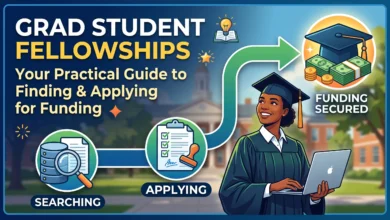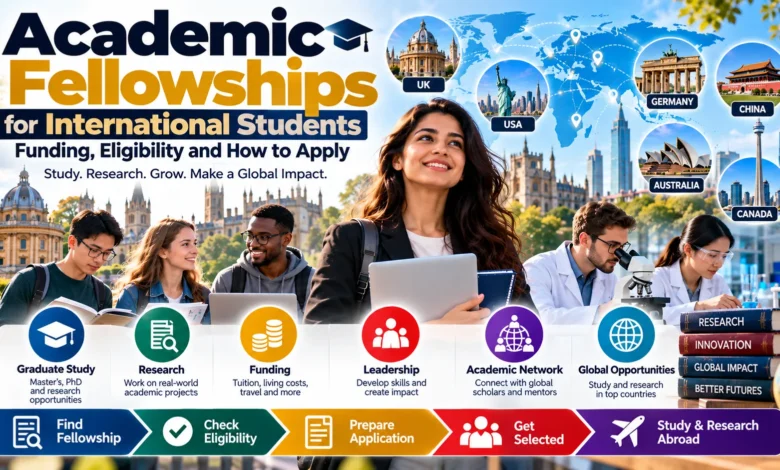
Academic fellowships can give international students and early-career academics access to graduate study, research, professional development and international academic networks.
However, the word fellowship covers many different types of opportunities.
One fellowship may finance a master’s degree. Another may support doctoral research, a short academic visit, leadership development or postdoctoral research. Some provide comprehensive funding, while others cover only specific expenses.
That distinction matters.
Students should not assume that every fellowship advertised as “international” is available to every nationality, that every programme is fully funded, or that admission to a university automatically results in fellowship funding.
A stronger strategy is to identify your academic level and objective first, then find programmes whose eligibility, funding and selection criteria match your profile.
This guide explains the major types of academic fellowships available to international students, what they can cover, where to find legitimate programmes and how to prepare a stronger application.
Academic Fellowships at a Glance
| Area | What Applicants Should Know |
|---|---|
| Study levels | Graduate, doctoral, research and postdoctoral |
| Eligibility | Programme-specific |
| Nationality | International eligibility varies |
| Funding | Partial to comprehensive |
| Academic performance | Usually important |
| Leadership | Important for some programmes |
| Research proposal | Common for research-focused fellowships |
| References | Frequently required |
| English proficiency | May be required by the programme or university |
| Age limits | Apply to some fellowships, not all |
| Deadlines | Different for every programme |
Always verify requirements through the fellowship provider or university’s official website.
What Is an Academic Fellowship?
An academic fellowship is an award or structured programme that supports someone’s education, research or academic development.
Depending on the programme, a fellowship might support:
- A master’s degree
- Doctoral study
- Academic research
- Postdoctoral work
- A visiting research period
- Leadership development
- Specialized academic training
- International collaboration
Some fellowships primarily provide financial support.
Others combine funding with activities such as:
- Leadership development
- Mentoring
- Seminars
- Professional networking
- Research training
- Community projects
- International conferences
This is why applicants should evaluate what a programme actually provides rather than relying only on the word “fellowship.”
Fellowship vs Scholarship: What Is the Difference?
There is no universal definition separating scholarships and fellowships.
Universities and funding organizations can use the terms differently.
A scholarship often focuses primarily on funding education, while a fellowship may place greater emphasis on:
- Research
- Leadership
- Professional development
- Academic communities
- Specialized projects
There are many exceptions.
For example, the Rhodes Scholarship is called a scholarship but combines postgraduate funding with a broader academic and leadership community.
The programme’s actual eligibility, purpose and funding package are therefore more important than its title.
Who Can Apply for Academic Fellowships?
Eligibility varies substantially between programmes.
Opportunities can exist at several academic stages.
Undergraduate Students
Undergraduate students may find opportunities involving:
- Summer research
- International exchange
- Academic projects
- Leadership programmes
- Short-term study
- Research placements
However, many major international fellowships are designed for postgraduate study and therefore require applicants to complete an undergraduate degree before beginning the programme.
Master’s Students and Graduates
Graduate-level fellowships may support study in fields such as:
- Public policy
- International relations
- Business
- Engineering
- Computer science
- Economics
- Social sciences
- Humanities
- Environmental studies
- Public health
Some programmes finance a complete master’s degree, while others support only part of the study period.
PhD Students
Doctoral students may find fellowships supporting:
- Full doctoral programmes
- Dissertation research
- Laboratory research
- Fieldwork
- Archival research
- International research visits
- Thesis-writing periods
Requirements can include a research proposal, supervisor or institutional affiliation.
Postdoctoral Researchers
Researchers who have completed a doctorate can explore postdoctoral fellowships.
These programmes are generally more focused on research development than conventional student scholarships.
Applicants looking specifically for this career stage should also read our guide to Postdoctoral Fellowships for International Researchers.
What Can an Academic Fellowship Cover?
Funding varies considerably.
Depending on the programme, financial support could include:
- Tuition fees
- Monthly living expenses
- Accommodation
- International travel
- Health insurance
- Academic materials
- Research expenses
- Conference costs
- Visa-related expenses
- Relocation support
A programme covering tuition alone should not automatically be described as fully funded.
Similarly, a programme providing a monthly stipend may still leave students responsible for tuition or travel.
Before applying, determine exactly:
- What the fellowship pays.
- What the student must pay.
- Whether funding lasts for the entire programme.
- Whether additional support is conditional.
Major Academic Fellowships International Students Can Research
There are many academic funding programmes worldwide.
The following examples demonstrate how different major international fellowships can operate. Their application windows and requirements can change, so applicants should always check current official information.
Rhodes Scholarship
The Rhodes Scholarship supports postgraduate study at the University of Oxford.
It is one of the best-known international postgraduate awards and combines academic study with a wider scholar community.
The Rhodes Trust describes the scholarship as a fully funded postgraduate award.
Selection considers qualities including academic achievement as well as broader characteristics connected with leadership, character and service.
However, an important detail is often overlooked:
Rhodes eligibility is constituency-based.
Applicants should check the relevant constituency for their citizenship or circumstances rather than assuming that one worldwide application route applies to everyone.
Eligibility requirements can include:
- Citizenship or residency conditions
- Academic qualifications
- Age requirements
- Oxford course eligibility
- Constituency-specific rules
The Rhodes Trust has also stated that its separate Global Rhodes Scholarship route is currently suspended.
Applicants should therefore use the official eligibility information to determine which current route, if any, applies to them.
Schwarzman Scholars
Schwarzman Scholars is a one-year master’s programme at Tsinghua University in Beijing.
The programme focuses on global affairs and leadership and brings together participants from different countries and academic backgrounds.
Applicants are evaluated on more than grades.
Relevant factors can include:
- Academic ability
- Leadership
- Intellectual ability
- Character
- Professional or extracurricular experience
- Communication
- English proficiency
Applicants need to meet the programme’s degree and age requirements.
Application cycles are announced by the programme, so students should check the current admissions page rather than relying on an old deadline.
University Graduate Fellowships
Many valuable opportunities are offered directly by universities.
These may include:
- Graduate fellowships
- Doctoral fellowships
- Research fellowships
- Leadership awards
- College-specific funding
- Departmental scholarships
- Teaching assistantships
- Research assistantships
Do not limit your search to globally famous awards.
A department closely connected with your academic field may offer funding that fits your profile better than a highly publicized international programme.
Research Fellowships
Students interested in academic or research careers can investigate research-specific fellowships.
These may support:
- Doctoral research
- Laboratory projects
- Fieldwork
- Archival research
- Data collection
- International collaboration
- Visiting research
- Postdoctoral research
Research fellowships frequently place greater emphasis on the proposed project and academic fit.
Government-Funded Academic Opportunities
Governments and national education agencies in various countries support international education and research.
Eligibility may depend on:
- Citizenship
- Country of study
- Degree level
- Academic field
- Academic achievement
- Language ability
- Bilateral agreements
Students should use official government or national education-agency websites to verify these programmes.
Popular Destinations for Academic Fellowships
International academic funding is available across many countries.
The best destination depends on the student’s subject, academic goals, funding needs and programme fit.
United Kingdom
The UK hosts major universities and numerous postgraduate funding programmes.
Students can investigate:
- University scholarships
- Graduate fellowships
- Doctoral funding
- Research awards
- Rhodes Scholarships at Oxford for eligible applicants
- Institution-specific programmes
United States
US universities can provide graduate support through:
- Fellowships
- Research assistantships
- Teaching assistantships
- Departmental awards
- University scholarships
Funding arrangements vary considerably between universities and academic disciplines.
Doctoral programmes in some fields may provide substantial institutional funding, while master’s funding can operate differently.
Applicants should check the financial support section for each programme.
Germany
Germany offers opportunities through:
- Universities
- Research institutes
- Doctoral programmes
- Research fellowships
- External funding organizations
Germany can be particularly relevant for students planning research-oriented careers.
China
International students can investigate university and externally funded academic opportunities in China.
Schwarzman Scholars at Tsinghua University is one prominent example of a programme combining graduate study with leadership development.
Canada
Canadian universities may provide:
- Graduate scholarships
- Research funding
- Teaching assistantships
- Research assistantships
- Doctoral awards
- Institution-specific fellowships
Funding availability can differ between departments even within the same university.
Australia
Australian universities offer graduate research scholarships and other academic awards.
Applicants should check:
- International eligibility
- Tuition coverage
- Stipend
- Research support
- Scholarship duration
European Countries
Universities throughout Europe offer:
- Master’s funding
- Doctoral positions
- Research fellowships
- Mobility programmes
- Joint academic programmes
Students should investigate individual countries and universities according to their academic field.
Which Academic Fields Receive Fellowship Support?
Academic fellowships exist across a wide range of disciplines.
Science, Technology, Engineering and Mathematics
Potential subjects include:
- Computer science
- Artificial intelligence
- Engineering
- Physics
- Chemistry
- Mathematics
- Biology
- Environmental science
- Data science
Health and Medicine
Possible areas include:
- Public health
- Biomedical science
- Epidemiology
- Global health
- Neuroscience
- Health policy
Clinical programmes can involve additional professional or licensing requirements.
Social Sciences
Funding may be available in:
- Economics
- Political science
- Sociology
- International relations
- Development studies
- Public policy
- Education
- Psychology
Humanities
Potential subjects include:
- History
- Philosophy
- Literature
- Linguistics
- Cultural studies
- Archaeology
Business and Leadership
Some programmes combine academic study with professional or leadership development.
Potential areas include:
- Management
- Economics
- Entrepreneurship
- International affairs
- Public leadership
What Do Fellowship Selection Committees Look For?
There is no universal winning profile.
Different programmes prioritize different qualities.
Several factors, however, frequently appear in competitive academic selection.
Academic Performance
A strong academic record can demonstrate readiness for advanced study.
Committees may consider:
- Grades
- Academic awards
- Course performance
- Research
- Publications
- Academic progression
Strong grades alone do not guarantee selection.
Clear Academic Direction
Applicants should be able to explain:
- What they want to study
- Why they want to study it
- Why the programme is suitable
- How it connects with their future plans
Generic ambitions make an application less convincing.
Leadership
Leadership-focused programmes may look for evidence that applicants have taken responsibility and influenced outcomes.
Leadership can include:
- Leading a student project
- Organizing an initiative
- Coordinating research
- Building an organization
- Mentoring students
- Solving a community problem
A formal leadership title is not always necessary.
Community and Service
Some fellowships consider service an important selection factor.
Evidence could come from:
- Volunteering
- Educational initiatives
- Community projects
- Nonprofit activities
- Social-impact programmes
Applicants should present genuine activities rather than creating artificial experiences solely for an application.
Research Potential
Research-focused programmes may evaluate:
- Research experience
- Thesis work
- Methodological knowledge
- Publications
- Research proposal
- Academic references
- Fit with the institution
Communication
Applications and interviews also reveal whether candidates can explain their experiences and ideas clearly.
An impressive achievement has limited value if the committee cannot understand the applicant’s contribution or why it matters.
How to Find Academic Fellowships
A random internet search can produce expired or misleading opportunities.
Use a structured process instead.
Step 1: Identify Your Academic Level
Determine whether you need:
- Undergraduate funding
- Master’s funding
- PhD funding
- Research support
- Postdoctoral funding
This immediately removes many irrelevant programmes.
Step 2: Define Your Subject
Instead of searching:
International fellowships
try something more specific:
International master’s fellowships public policy
or:
PhD research fellowship environmental science Europe
Specific searches usually produce more relevant results.
Step 3: Select Potential Destinations
Consider:
- Academic quality
- Research strengths
- Programme language
- Funding
- Cost of living
- Visa requirements
- Career objectives
Step 4: Search University Websites
Visit university funding sections directly.
Look for pages such as:
- Scholarships
- Funding
- Financial Aid
- Graduate Funding
- Fellowships
- Research Funding
- International Students
Step 5: Check Fellowship Organizations
If you discover an opportunity through a blog, social media post or scholarship listing website, locate the programme’s official page before applying.
Use the official source for:
- Eligibility
- Deadline
- Funding
- Application documents
- Selection criteria
- Application portal
Create a Fellowship Shortlist
Do not apply randomly.
Build a simple tracker.
| Fellowship | Country | Level | Funding | Eligibility | Deadline | Status |
|---|---|---|---|---|---|---|
| Fellowship A | UK | Master’s | Verify | Eligible | Date | Preparing |
| Fellowship B | Germany | PhD | Verify | Checking | Date | Researching |
| Fellowship C | Canada | Research | Verify | Eligible | Date | References |
This makes it easier to prioritize opportunities and avoid missing deadlines.
Documents Commonly Required
Academic fellowship applications may request:
- Academic transcripts
- Degree certificates
- Academic CV
- Personal statement
- Statement of purpose
- Fellowship essays
- Research proposal
- Recommendation letters
- Language-test results
- Passport information
- Writing samples
- Portfolio
- Proof of admission
Requirements vary.
Do not prepare one document package and assume it will satisfy every fellowship.
How to Write a Strong Personal Statement
A personal statement should provide information that cannot be understood from your transcript alone.
Explain Your Academic Background
Briefly establish what you have studied and how your interests developed.
Identify Important Experiences
Use specific examples from:
- Research
- Academic projects
- Employment
- Leadership
- Volunteering
- Community activities
Explain Your Academic Goal
Be precise about what you want to study or investigate.
Connect the Programme With Your Goal
Explain why the fellowship’s actual academic opportunities fit your plans.
Avoid generic statements such as:
“This prestigious fellowship will completely transform my life.”
A stronger application explains exactly why the programme is relevant.
Writing Fellowship Essays
Different essays may assess different qualities.
For example:
- Academic interests
- Leadership
- Community service
- Career plans
- Personal development
Avoid repeating exactly the same story in every essay.
Use different experiences where appropriate to give the selection committee a fuller picture of your background.
Recommendation Letters
Recommendations can play an important role in competitive applications.
Possible referees include:
- Professor
- Research supervisor
- Thesis advisor
- Employer
- Project supervisor
Choose someone who genuinely knows your work.
A well-known academic who barely knows you may not necessarily provide a stronger recommendation than a supervisor who has worked closely with you.
Ask early.
Provide your referee with:
- Fellowship details
- Deadline
- CV
- Academic goals
- Relevant instructions
Never submit a fabricated recommendation.
Research Proposals
Research-oriented fellowships may require a formal proposal.
A strong proposal commonly addresses:
- Research problem
- Existing knowledge
- Research gap
- Research question
- Methodology
- Timeline
- Expected outcomes
- Institutional or supervisor fit
The project should be achievable within the available time and resources.
English-Language Requirements
International students may need evidence of English proficiency.
Depending on the university, accepted evidence could include:
- IELTS
- TOEFL
- Other recognized assessments
- Qualifying previous education
Requirements and exemptions vary.
Do not assume that one English test is accepted everywhere.
Check the specific university and fellowship requirements before paying for an examination.
How to Apply for Academic Fellowships
Step 1: Confirm Eligibility
Check:
- Citizenship
- Residency
- Age requirements
- Academic qualifications
- Subject restrictions
- Language requirements
- Degree level
Do this before spending significant time on essays.
Step 2: Understand Admission and Funding
Determine whether:
- Fellowship and university admission use one application.
- You must apply separately for admission.
- You need an admission offer before applying for funding.
- The fellowship nomination comes from the university.
This differs between programmes.
Step 3: Start Early
Competitive applications can involve:
- Multiple essays
- References
- Transcripts
- Research proposals
- University applications
- Institutional nominations
Starting several months ahead can make the process much easier.
Step 4: Draft Using Evidence
Avoid unsupported claims.
Instead of:
“I am an outstanding leader.”
describe a real situation where you took responsibility and what happened.
Step 5: Review the Application
Check for:
- Missing information
- Repetition
- Unsupported claims
- Grammar problems
- Inconsistent dates
- Unclear goals
Follow the programme’s rules regarding application assistance.
Step 6: Submit Before the Deadline
Confirm:
- Deadline date
- Deadline time
- Time zone
- Reference deadline
- Supporting-document requirements
Do not assume that referees have additional time unless the official instructions explicitly say so.
Preparing for a Fellowship Interview
Some programmes interview shortlisted applicants.
You may be asked about:
- Academic interests
- Research
- Previous experiences
- Leadership
- Career goals
- Community involvement
- Current issues related to your field
- Why you selected the programme
Prepare thoroughly but avoid memorizing artificial answers.
Interviewers may ask follow-up questions that test whether you genuinely understand what you have written.
Common Fellowship Application Mistakes
Applying Without Checking Eligibility
A prestigious programme is irrelevant if you cannot legally apply.
Using Generic Essays
Your application should explain your specific experiences and goals.
Focusing Only on Grades
Some fellowships evaluate leadership, service, research and other qualities alongside academic performance.
Copying Successful Essays
Another applicant’s story cannot accurately represent your experiences.
Missing Reference Deadlines
A missing recommendation can make an otherwise strong application incomplete.
Exaggerating Achievements
Academic claims should be accurate and verifiable.
Assuming “International” Means Every Country
Nationality restrictions can still apply.
Using Expired Deadlines
Application windows change.
Always check the current official programme page before applying.
How to Avoid Fellowship Scams
International students can encounter fake scholarship and fellowship advertisements.
Be cautious when you see:
- Guaranteed selection
- Guaranteed admission
- Requests to purchase an award
- Unofficial application portals
- Suspicious email addresses
- Fake acceptance letters
- Requests for inappropriate financial information
- Unrealistic funding claims
Verify the programme independently through the official university or funding organization.
A legitimate fellowship can be highly competitive.
Nobody should be able to guarantee that a selection committee will choose you.
A Practical Six-Month Fellowship Plan
| Month | Main Goal |
|---|---|
| Month 1 | Identify fellowships and check eligibility |
| Month 2 | Research universities and programmes |
| Month 3 | Develop your academic narrative or research proposal |
| Month 4 | Draft essays and request references |
| Month 5 | Revise documents and prepare required evidence |
| Month 6 | Complete final checks and submit |
If university admission and fellowship funding use separate application processes, start even earlier.
Should You Apply for More Than One Fellowship?
In many cases, yes, provided the programmes allow it.
Relying on one extremely competitive fellowship creates unnecessary risk.
You could build a portfolio containing:
- Major international fellowships
- University scholarships
- Departmental funding
- Research assistantships
- Teaching assistantships
- Government-funded programmes
However, quality remains important.
Sending ten generic applications may be less effective than submitting several carefully targeted applications for programmes that genuinely match your profile.
Frequently Asked Questions
Can international students apply for academic fellowships?
Yes. Many programmes accept international applicants, although nationality, residency and academic requirements vary.
Are academic fellowships fully funded?
Some provide comprehensive funding, while others cover only specific expenses. Check tuition, living costs, travel, insurance and research support separately.
Do I need perfect grades?
Not necessarily. Academic achievement can be important, but some programmes also assess research, leadership, service, professional experience and other qualities.
Can undergraduate students apply?
Yes, some academic opportunities are designed for undergraduates. However, many major graduate fellowships require a bachelor’s degree before the funded programme begins.
Can I apply without IELTS?
Possibly. Universities and fellowships have different language requirements and exemption policies. Verify the specific programme before arranging a test.
Do fellowships have age limits?
Some do and others do not. Always check the current eligibility criteria.
Can I apply for multiple fellowships?
Often yes, but applicants should check rules regarding simultaneous applications and overlapping funding.
Does a high GPA guarantee selection?
No. Competitive fellowships may consider multiple criteria and can receive applications from many academically strong candidates.
Final Takeaway
Academic fellowships can help international students access graduate education, research opportunities, international networks and professional development.
But there is no single type of academic fellowship.
One programme may finance a master’s degree.
Another may support doctoral research.
Another may emphasize leadership.
Another may fund postdoctoral research.
The better strategy is therefore:
Choose your academic goal → Find relevant programmes → Check eligibility → Verify funding → Prepare strong evidence → Secure references → Tailor your application → Apply through official channels.
Major programmes such as the Rhodes Scholarship and Schwarzman Scholars demonstrate how international fellowships can combine academic study with broader development.
They also demonstrate why applicants should check current official rules rather than relying on old scholarship lists.
Your goal should not be to apply for every famous fellowship.
Focus on programmes where your academic background, interests, achievements and future plans genuinely align with what the fellowship is designed to support.