Finding international jobs with visa sponsorship can be an important step for professionals and skilled workers who want to build careers outside their home countries. However, understanding how overseas recruitment works is just as important as finding a suitable vacancy.
A job advertisement may mention international applicants, relocation assistance, or visa sponsorship without clearly explaining what the employer will provide. Some employers support the immigration application, while others require candidates to already have permission to work. Even when sponsorship is available, applicants must meet the destination country’s immigration requirements.
For international job seekers, the challenge is identifying genuine employers, understanding the available work visa pathways, and preparing applications that demonstrate the qualifications employers need. Recruitment practices differ between countries, industries, and individual organizations.
This guide explains how visa sponsorship works, where to find legitimate international employment opportunities, which documents applicants may need, how to evaluate job offers, and what to expect during the application process.
Quick Overview: International Jobs With Visa Sponsorship
| Topic | What Applicants Should Know |
|---|---|
| Employment type | Full-time, fixed-term, temporary, or other qualifying employment |
| Potential destinations | Canada, Germany, Australia, UK, Ireland, New Zealand, UAE, and other countries |
| Career fields | Healthcare, engineering, IT, skilled trades, hospitality, logistics, and more |
| Eligibility | Depends on occupation, employer, qualifications, nationality, and immigration rules |
| Sponsorship | Employer support varies by country and visa category |
| Language requirements | Depend on the job, destination, and immigration pathway |
| Application method | Official employer career pages, government employment portals, and verified recruiters |
| Application deadlines | Depend on individual vacancies |
This article provides general employment and immigration guidance. It is not a listing for a particular employer or a guarantee that sponsorship is available for any specific vacancy.
What Are International Jobs With Visa Sponsorship?
Visa sponsorship generally refers to an arrangement in which an employer provides the support required under a country’s immigration system for a foreign national to obtain permission to work.
The meaning of sponsorship differs between countries.
In some destinations, an employer must hold an official sponsor licence or accreditation. In others, the employer may need to obtain labour market approval, submit a nomination, issue employment documentation, or complete other procedures before the worker can apply for the relevant visa.
Sponsorship does not necessarily mean that an employer pays for every part of the immigration or relocation process.
An employer may support the work authorization application while the applicant remains responsible for certain permitted expenses, such as personal travel, medical examinations, document translations, or other costs.
Applicants should confirm exactly what the employer will provide before accepting an offer.
Visa Sponsorship Versus Relocation Assistance
These terms are often used together, but they describe different forms of support.
Visa sponsorship concerns the employer’s role in obtaining legal permission for a foreign worker to take up employment.
Relocation assistance may include temporary accommodation, travel arrangements, moving expenses, or help settling into a new country.
An employer may offer sponsorship without relocation assistance, or provide relocation support to someone who already has the right to work.
Neither arrangement should be assumed unless it is clearly confirmed in the employment offer.
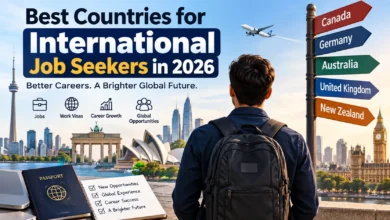
Countries Offering Employer-Supported Work Visa Pathways
There is no single international sponsorship system. Each country has its own rules for employers recruiting foreign workers.
The following destinations have established employer-supported employment pathways. Their inclusion does not mean that every employer or vacancy offers sponsorship.
United Kingdom
The UK’s Skilled Worker visa allows eligible foreign nationals to work for approved employers in qualifying occupations.
Applicants generally need a confirmed job offer, a Certificate of Sponsorship, an eligible occupation, and compliance with applicable salary and English language requirements.
Official resources:
- UK Skilled Worker Visa: https://www.gov.uk/skilled-worker-visa
- Register of Licensed Sponsors: https://www.gov.uk/government/publications/register-of-licensed-sponsors-workers
A licensed sponsor is not necessarily recruiting overseas applicants for every advertised position. Applicants should confirm sponsorship availability for the specific vacancy.
Canada
Canada’s employer-specific work permit allows foreign nationals to work under the conditions stated on their permit.
For many positions, employers need a Labour Market Impact Assessment (LMIA). Other employment arrangements may qualify for an LMIA exemption.
The employer must complete the applicable requirements before the worker submits the relevant work permit application.
Official resources:
- Canada Job Bank: https://www.jobbank.gc.ca/
- Work in Canada: https://www.canada.ca/en/immigration-refugees-citizenship/services/work-canada.html
Applicants should verify whether a vacancy is open to international candidates and whether the employer is prepared to complete the necessary immigration procedures.
Australia
Australia’s Skills in Demand visa (subclass 482) allows approved employers to sponsor suitably skilled foreign workers for eligible positions.
Applicants must meet the relevant skills, English language, nomination, and other immigration requirements.
Official resources:
- Australian Department of Home Affairs: https://immi.homeaffairs.gov.au/
- Workforce Australia: https://www.workforceaustralia.gov.au/
Applicants should investigate occupation-specific requirements and confirm whether the employer is willing and eligible to sponsor the advertised role.
Germany
Germany offers employment-based immigration routes for qualified professionals, including pathways for eligible applicants with recognized academic or vocational qualifications.
For the work visa for qualified professionals, applicants generally need a qualifying job offer and qualifications recognized or considered comparable in Germany. Regulated professions may require professional licensing.
Germany also offers an Opportunity Card for eligible applicants seeking employment. This is a job-search pathway rather than employer sponsorship, and it has separate eligibility and financial requirements.
Official resources:
- Make it in Germany: https://www.make-it-in-germany.com/en/
- German Federal Employment Agency: https://www.arbeitsagentur.de/en
New Zealand
New Zealand’s Accredited Employer Work Visa (AEWV) allows eligible foreign workers to take qualifying positions with accredited employers.
The employer must have the necessary accreditation and an approved job check. Applicants must meet the applicable experience, qualification, registration, language, and other requirements.
Official resources:
- Immigration New Zealand: https://www.immigration.govt.nz/
- Careers New Zealand: https://www.careers.govt.nz/
Applicants should independently verify employer accreditation and ensure the employment agreement matches the position being offered.
Ireland
Ireland has employment permit pathways for eligible non-European Economic Area workers.
The Critical Skills Employment Permit covers qualifying employment in specified occupations, while the General Employment Permit covers a broader range of eligible positions, subject to its conditions.
Ireland’s General Employment Permit can be applied for by either the prospective employer or the foreign worker.
Official resources:
- Ireland Employment Permits: https://enterprise.gov.ie/en/what-we-do/workplace-and-skills/employment-permits/
- JobsIreland: https://www.jobsireland.ie/
Applicants should check occupation eligibility, employment conditions, and permit requirements before applying.
Which Types of Jobs May Offer Visa Sponsorship?
Visa sponsorship is not limited to a single profession. Employers in different industries may recruit internationally when suitable candidates are available and immigration requirements can be met.
However, the availability of sponsorship depends on the specific position and employer, not simply the industry.
Healthcare and Medical Professions
International recruitment may involve nurses, doctors, allied health professionals, medical technicians, and other qualified healthcare workers.
These occupations frequently involve professional registration, qualification assessments, and language requirements.
A healthcare worker should investigate licensing requirements before applying for positions abroad. A degree or professional licence issued in one country may not automatically authorize employment in another.
Engineering and Information Technology
Engineering and technology employers may recruit internationally for specialized positions involving software development, cybersecurity, cloud infrastructure, mechanical engineering, electrical engineering, and other technical disciplines.
Applicants should demonstrate relevant technical skills through professional experience, qualifications, projects, and certifications where appropriate.
Some engineering positions may require local professional recognition or registration.
Construction and Skilled Trades
Construction and industrial employers may recruit electricians, welders, mechanics, plumbers, technicians, and other skilled workers.
Vocational qualifications, documented experience, and occupational licensing can be important.
Applicants should verify whether their intended occupation qualifies under the destination country’s immigration rules.
Hospitality and Food Services
Hotels, restaurants, and hospitality businesses may recruit international workers for eligible positions.
Potential roles include chefs, hospitality managers, and specialized service occupations.
However, not every entry-level hospitality vacancy qualifies for a sponsored work visa. Immigration rules may impose occupation, skill, salary, or employer eligibility restrictions.
Logistics, Manufacturing and Agriculture
Some employers recruit foreign workers for eligible positions in logistics, manufacturing, food production, agriculture, and related industries.
Applicants should distinguish between skilled employment pathways, temporary foreign worker programs, and seasonal employment arrangements.
A seasonal position may have different visa conditions, employment rights, and maximum periods of stay from a permanent or long-term professional role.
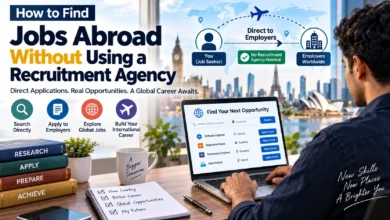
How to Find Legitimate International Jobs With Visa Sponsorship
Finding genuine vacancies requires a more focused approach than entering the phrase “visa sponsorship jobs” into a search engine.
A useful job search should combine official employment resources, employer verification, and careful review of immigration eligibility.
Start With Official Employer Career Pages
Identify organizations operating in your professional field and visit their official recruitment websites.
Look for information about international recruitment, work authorization, relocation assistance, and sponsorship eligibility.
If a vacancy does not mention sponsorship, do not assume that it is available.
You can contact the employer’s recruitment department through an independently verified official channel to ask whether the position is open to applicants requiring work authorization.
Use Government Employment Portals
Official employment services can help applicants identify vacancies and access reliable labour market information.
Examples include Canada Job Bank, Germany’s Federal Employment Agency, Australia’s Workforce Australia, and Ireland’s JobsIreland.
These portals do not guarantee that every listed vacancy offers visa sponsorship.
Applicants should review individual job descriptions and confirm eligibility directly with the employer.
Search Using Occupation-Specific Terms
Instead of searching only for general overseas employment, combine your occupation with the destination and relevant immigration terminology.
For example:
- Mechanical engineer jobs with employer sponsorship in Australia
- Software developer positions with relocation support in Germany
- Nursing jobs with visa sponsorship in the United Kingdom
- Accredited employer engineering jobs in New Zealand
These searches can help identify relevant employers, but the information in individual advertisements must still be verified.
Maintain an Application Tracker
Record the employer’s name, official website, position, location, application date, sponsorship status, and recruitment contact.
Keep copies of job descriptions and correspondence.
This makes it easier to follow up on applications, identify duplicate advertisements, and compare offers accurately.
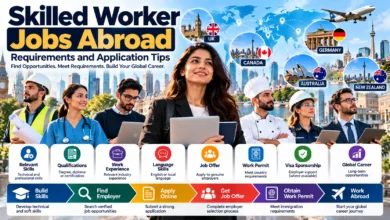
Eligibility Requirements for Visa Sponsorship Jobs
There is no universal eligibility checklist for international employment. Each destination has its own immigration rules, and employers establish additional requirements for individual positions.
Applicants should review the following factors before submitting applications.
| Requirement | What to Check |
|---|---|
| Education | Whether the position requires a degree, diploma, or vocational qualification |
| Experience | Whether previous employment in the relevant occupation is required |
| Language | Whether the employer or immigration authority requires proof of language proficiency |
| Professional licensing | Whether foreign qualifications must be recognized or assessed |
| Employment offer | Whether the position meets the relevant immigration requirements |
| Employer eligibility | Whether the employer has the necessary approval or accreditation |
| Immigration conditions | Whether the applicant meets the relevant visa requirements |
Applicants should distinguish between an employer’s preferred qualifications and the mandatory requirements established by immigration authorities.
A company may be willing to hire an applicant who does not meet the conditions for the intended work visa. In that situation, the employment offer alone will not resolve the immigration issue.
Documents Required for International Employment
The documents required for overseas employment depend on the employer, occupation, destination, and immigration pathway.
Preparing a basic document folder can help applicants respond efficiently when employers request additional information.
Common documents include:
- A valid passport
- An updated professional CV or resume
- Academic qualifications and transcripts
- Vocational or professional certificates
- Employment references and experience letters
- Professional registration documents, where applicable
- Language test results, if required
- A signed employment offer or contract
- Employer sponsorship or nomination documentation, where applicable
- Police certificates, medical examination results, or other immigration documents when required
Applicants should not submit every document to every employer automatically.
During the initial recruitment stage, a CV and other job-specific materials may be sufficient. Sensitive identification and immigration documents should be provided only through verified and appropriate application channels.
Some immigration authorities require certified translations, credential assessments, or documents issued within a specified period. Always check the official instructions before arranging these services.
How to Apply for International Jobs With Visa Sponsorship
A successful overseas employment application requires preparation, accurate documentation, and a clear understanding of the employer’s recruitment process.
The following steps can help applicants organize their job search.
Step 1: Identify Your Target Occupation and Destination
Start by selecting the occupation that matches your education, skills, and professional experience.
Research countries where the occupation is eligible under an appropriate employment immigration pathway.
Check whether your qualifications need to be recognized before you can legally work in the destination country.
Step 2: Prepare a Tailored CV
Create a professional CV that highlights the experience and skills relevant to the advertised position.
Include measurable achievements where appropriate, but do not exaggerate responsibilities or invent previous employment.
Follow the employer’s instructions regarding CV format, supporting documents, and cover letters.
Step 3: Find Employers Recruiting International Applicants
Search official company career pages and government employment portals.
Review the vacancy carefully to determine whether the employer considers applicants who require work authorization.
Where sponsorship information is missing, contact the employer through its official recruitment channel.
Step 4: Submit Your Application
Complete the employer’s official application form and upload the requested documents.
Provide accurate information about your qualifications, experience, and current work authorization.
If the application asks whether you require sponsorship, answer according to your actual immigration circumstances.
Step 5: Attend Interviews and Complete Assessments
Employers may conduct interviews by telephone, video call, or other approved methods.
Some positions involve technical assessments, practical tests, or professional registration checks.
Prepare examples demonstrating your relevant skills and experience.
Ask the employer about the expected recruitment timeline and whether immigration support is available for the position.
Step 6: Review the Employment Offer
Before accepting an offer, examine the written employment contract.
Confirm the salary, working hours, job location, employment duration, leave entitlement, and any conditions relating to accommodation or relocation assistance.
Ask the employer to explain which immigration-related expenses it will cover and which costs, if any, you are legally responsible for paying.
Step 7: Complete the Immigration Process
Follow the official immigration authority’s instructions for the relevant visa or work permit.
The employer may need to complete sponsorship, nomination, accreditation, or other procedures before you can submit your application.
Do not make irreversible relocation arrangements until you understand the required approvals and the conditions under which you may legally begin employment.
Applicants should check the official organization or program website for the current application instructions.
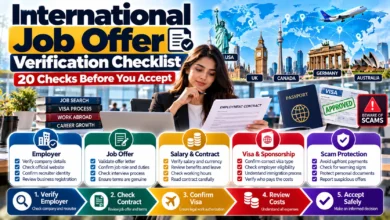
How to Recognize Fake Visa Sponsorship Job Offers
International job seekers may encounter fraudulent recruitment advertisements that misuse the names of genuine companies or promise immigration benefits that do not exist.
A convincing website or professionally designed offer letter does not, by itself, establish that an employer or recruitment agency is legitimate.
Before accepting an offer, verify the employer independently.
Recruitment Warning Signs
Investigate an offer carefully if you encounter any of the following:
- A recruiter promises guaranteed employment or visa approval.
- The employer demands payment through an unverified personal bank account.
- The recruiter refuses to provide independently verifiable company information.
- The offer arrives without a credible recruitment or selection process.
- You are pressured to pay immediately or provide sensitive personal information.
- The employer asks you to use false documents or work under an inappropriate visa.
Some legitimate immigration processes involve official government fees and other permitted expenses. The presence of a fee alone does not establish fraud.
However, applicants should verify the purpose, recipient, and legality of every payment before transferring money.
Use the destination country’s official immigration website to confirm the applicable rules and fee arrangements.
Important Questions to Ask Before Accepting a Sponsored Job
A written employment offer should provide enough information for an applicant to understand the position and the practical implications of relocating.
Before accepting, ask the employer:
- Which visa or work permit will be used for this position?
- What sponsorship or immigration procedures will the employer complete?
- Who is responsible for the permitted application and relocation expenses?
- When is the expected employment start date?
- Is the employment contract temporary, fixed-term, or ongoing?
- What happens if the immigration application is refused?
- Does the work authorization restrict employment to a particular employer, occupation, or location?
Applicants planning to relocate with family members should also investigate the relevant dependent visa arrangements.
Do not assume that a sponsored employment visa automatically provides permission for a spouse or children to accompany the worker.
Frequently Asked Questions
1. Can I Get an International Job With Visa Sponsorship Without Experience?
Some employers recruit candidates for positions requiring limited previous experience. However, eligibility depends on the occupation, employer, and immigration pathway.
Certain work visas require specific qualifications, experience, or minimum skill levels. Applicants should verify whether an entry-level position qualifies for the relevant immigration route.
2. Does Visa Sponsorship Mean the Employer Pays for Everything?
No. Sponsorship does not automatically include airfare, accommodation, visa fees, medical examinations, or other relocation expenses.
The employer’s responsibilities depend on the applicable law and the agreed employment arrangements.
Applicants should request written confirmation of the benefits and expenses covered by the employer.
3. Can I Apply for Visa Sponsorship Jobs From My Home Country?
Yes. Many employers accept applications from candidates living overseas.
However, the employer must be willing and legally able to recruit an international applicant for the particular position.
The applicant must also meet the relevant immigration requirements.
4. Is IELTS Compulsory for International Visa Sponsorship Jobs?
Not universally.
Language requirements depend on the destination, occupation, employer, and immigration pathway.
Some visa categories require an approved English language test, while others accept alternative evidence or have different language requirements.
Applicants should check the official immigration instructions for their intended visa.
5. Can I Change Employers After Receiving a Sponsored Work Visa?
It depends on the conditions of the visa or work permit.
Some employment-based immigration permissions are linked to a particular employer, occupation, or location.
Changing employers may require a new sponsorship arrangement, an updated permit, or another immigration application.
Applicants should confirm the applicable rules before leaving their existing position.
6. Does Visa Sponsorship Guarantee Permanent Residence?
No. Temporary work authorization and permanent residence are separate immigration matters.
Some employment pathways may provide opportunities to apply for longer-term residence, but eligibility depends on the destination country’s rules and the applicant’s circumstances.
Applicants should investigate the relevant residence requirements rather than assuming that a sponsored job automatically leads to permanent settlement.
7. How Long Does It Take to Get an International Job With Visa Sponsorship?
There is no universal timeline.
The process depends on employer recruitment, interview schedules, professional registration, sponsorship procedures, document preparation, and immigration processing.
Applicants should rely on official processing information and the employer’s confirmed recruitment schedule rather than promises of guaranteed approval within a particular period.
Final Takeaway
International jobs with visa sponsorship can provide opportunities for qualified applicants to pursue employment abroad, but the process requires more than finding an attractive job advertisement.
Applicants need to identify employers willing to recruit internationally, demonstrate that their qualifications match the position, and meet the destination country’s immigration requirements.
A focused approach involves researching occupation-specific vacancies, preparing accurate application documents, verifying employers independently, and reviewing employment contracts before making relocation commitments.
Whether you are a healthcare professional, engineer, skilled tradesperson, technology specialist, or applicant exploring another eligible occupation, begin with genuine vacancies that match your qualifications and circumstances.
Always verify current employment opportunities, sponsorship arrangements, immigration requirements, and application instructions through official sources before applying.