How to Find International Fellowships: A Practical Guide for Students, Researchers and Professionals

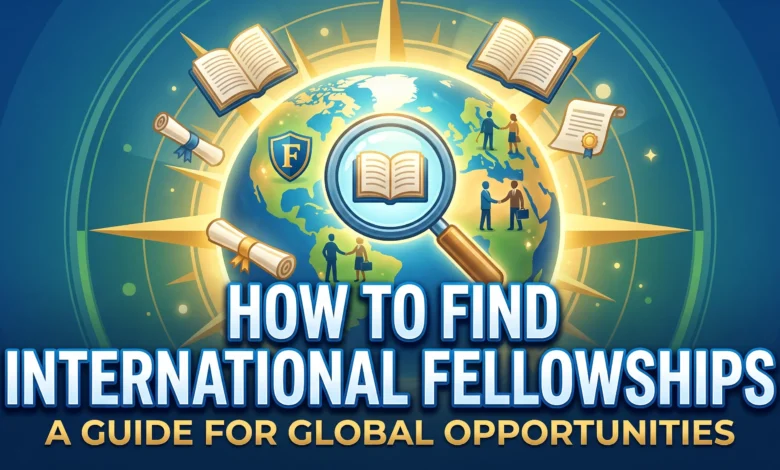
International fellowships can provide opportunities to study, conduct research, develop professional skills, work with experts, or spend time at an institution in another country. Unlike conventional jobs, fellowships are often designed around learning, research, leadership, public policy, professional development or academic exchange.
However, “international fellowship” covers a wide range of programs. Some are aimed at students, others at researchers, and some specifically target mid-career professionals. Funding can also vary from fully funded awards to programs that provide only selected forms of financial support.
Finding the right fellowship therefore requires a targeted search rather than simply applying to every opportunity that mentions international funding.
This guide explains where to search, how to assess eligibility, how to prepare a competitive application, and how to verify fellowship opportunities before applying.
What Is an International Fellowship?
An international fellowship is a structured opportunity that allows an eligible participant to undertake academic, research, professional-development or leadership activities, often in a country different from their own.
Depending on the program, a fellowship may involve:
- Academic study
- Independent research
- Laboratory research
- Professional training
- Leadership development
- Policy work
- Cultural exchange
- Journalism
- Public service
- Short-term study
- Academic collaboration
- Professional placements
The word fellowship does not automatically mean a scholarship or a job. The purpose and conditions depend on the individual program.
For example, Chevening Fellowships are aimed at mid-career professionals and can involve short courses, research or professional placements in the UK.
By contrast, the Marie Skłodowska-Curie Actions include research-focused opportunities such as Doctoral Networks and Postdoctoral Fellowships.
That difference is important when deciding which opportunities are appropriate for your background.
Who Can Apply for International Fellowships?
There is no universal fellowship eligibility requirement.
Programs may be designed for:
- Undergraduate students
- Master’s students
- PhD candidates
- Postdoctoral researchers
- Early-career researchers
- Journalists
- Public-sector professionals
- Nonprofit professionals
- Entrepreneurs
- Artists
- Academics
- Mid-career professionals
- Policy specialists
Some fellowships accept applicants from many countries, while others are restricted to particular nationalities or regions.
For example, Chevening’s fellowship programs are generally aimed at mid-career professionals with leadership potential, and individual fellowship programs can have additional eligibility requirements.
Never assume that because you qualify for one fellowship, you automatically qualify for another.
Start by Identifying Your Fellowship Category
Before searching, determine what type of fellowship you actually need.
This can dramatically improve your results.
Academic Fellowships
These are generally connected to education, academic development or scholarly activities.
Possible areas include:
- Education
- Economics
- Social sciences
- Public policy
- International relations
- Humanities
- Business
Research Fellowships
Research fellowships can be appropriate for graduate students, PhD candidates and researchers.
They may involve:
- Laboratory research
- Field research
- Data analysis
- Publications
- Academic collaboration
- Research projects
For researchers interested in Europe, the European Commission’s Marie Skłodowska-Curie Actions provide several research-focused funding routes.
Professional Fellowships
These are designed around professional development rather than conventional academic study.
They can involve:
- Training
- Leadership development
- Professional placements
- Policy work
- Networking
- Short courses
Leadership Fellowships
Leadership programs may target professionals who have demonstrated community, organizational or public-sector leadership.
Policy Fellowships
These may suit people working in areas such as:
- Public policy
- International development
- Governance
- Economics
- Human rights
- Climate policy
- Security
- Public administration
Journalism and Media Fellowships
Journalists and media professionals can find programs involving:
- Investigative research
- International reporting
- Journalism training
- Academic study
- Professional exchanges
The requirements can be substantially different from academic fellowships.
Where to Find International Fellowships
The quality of your search sources matters.
Start with official organizations and institutions whenever possible.
1. Government Fellowship Programs
Government-funded programs can be excellent starting points.
Search official government websites for:
- International fellowships
- Research fellowships
- Cultural exchange programs
- Leadership programs
- Academic exchange
- Professional fellowships
One example is the Chevening program in the UK, which maintains an official fellowship directory and allows applicants to explore available fellowship programs by country or territory.
2. Universities
Universities are another major source.
Search university websites for:
- Visiting fellowships
- Research fellowships
- Visiting scholar programs
- Graduate fellowships
- International research programs
- Academic exchange opportunities
Don’t only search the university’s central website.
Individual departments and research centers can publish opportunities separately.
For example, someone interested in environmental research should examine environmental science departments and research centers rather than searching only for the phrase “international fellowship.”
3. Research Organizations
Researchers should also look at dedicated research networks and funding programs.
The Marie Skłodowska-Curie Actions website provides information about funding opportunities and research positions, including PhD and postdoctoral vacancies funded through MSCA projects.
Its official information also directs researchers toward EURAXESS for vacancies funded by MSCA projects.
4. International Organizations
Organizations working in areas such as development, public policy, education and humanitarian affairs may periodically offer fellowship or professional-development programs.
Search their official websites for terms such as:
- Fellowship
- Visiting fellow
- Professional fellowship
- Research fellow
- Leadership program
- Policy fellowship
- Emerging leaders
5. Professional Associations
Professional associations can be particularly useful for specialized fields.
Examples include associations related to:
- Engineering
- Medicine
- Economics
- Law
- Public health
- Science
- Education
- Architecture
- Environmental studies
A fellowship advertised through a professional association may have highly specific eligibility requirements, making it less visible in general search results.
Use Search Engines More Effectively
Searching only for:
International fellowships
will produce a huge number of results.
Instead, combine your field, destination and career stage.
Try searches such as:
- International research fellowships for PhD students
- Public policy fellowships Europe
- Climate research fellowship abroad
- Engineering fellowships for international students
- Visiting researcher fellowship Germany
- International leadership fellowships
- Postdoctoral fellowships Europe
- Journalism fellowships international applicants
You can also add a year when searching for current opportunities.
For example:
international research fellowships 2027
However, always verify dates on the official program website because search results and third-party articles can remain online after a fellowship closes.
Create a Fellowship Search Spreadsheet
If you plan to apply for several fellowships, organization becomes important.
Create a spreadsheet such as:
| Fellowship | Country | Field | Eligibility | Deadline | Funding | Status |
|---|---|---|---|---|---|---|
| Fellowship A | UK | Policy | Professionals | October | Varies | Researching |
| Fellowship B | Germany | Research | PhD | November | Funded | Preparing |
| Fellowship C | Canada | Leadership | Professionals | January | Partial | Not started |
Add additional columns for:
- Official website
- Required documents
- Recommendation letters
- Application fee
- Interview
- Start date
- Visa information
- Notes
This prevents you from missing deadlines and makes it easier to compare programs.
Check Eligibility Before Starting the Application
Don’t spend several days preparing an application before checking the basic requirements.
Look at:
Nationality
Some fellowships are open globally while others are restricted to citizens of specific countries.
Academic Level
Determine whether the program is intended for:
- Undergraduate students
- Master’s students
- PhD candidates
- Postdoctoral researchers
- Professionals
Work Experience
Some professional fellowships require several years of relevant experience.
For example, Chevening Fellowships are designed for mid-career professionals, and program-specific eligibility conditions can apply.
Field of Study
Some fellowships are open to almost any discipline, while others are highly specialized.
Language
Check whether the program requires English or another language and whether proof of proficiency is necessary.
Age
Some programs have age requirements, while others do not.
Never assume an age requirement based on another fellowship.
Understand What “Fully Funded” Actually Means
One of the most important things to investigate is the funding package.
A fellowship may provide some combination of:
- Tuition
- Stipend
- Accommodation
- Airfare
- Health insurance
- Research expenses
- Visa-related support
- Travel allowance
- Meals
- Local transportation
But not every fellowship covers all of these costs.
The phrase fully funded should always be understood according to the official program’s definition.
Before applying, look for a specific funding section that explains what is and isn’t covered.
Calculate Your Own Financial Requirement
Even a funded fellowship can involve expenses that the award doesn’t cover.
Consider:
- Passport
- Visa
- Flights
- Local transportation
- Accommodation deposits
- Personal expenses
- Insurance
- Equipment
- Family-related costs, if applicable
Don’t make financial commitments based solely on the phrase “fully funded.”
Read the official funding terms.
Prepare Your CV for Fellowship Applications
A fellowship CV is not necessarily identical to a normal job résumé.
Depending on the program, emphasize:
- Education
- Research
- Publications
- Projects
- Professional experience
- Leadership
- Community involvement
- Awards
- Presentations
- Volunteer activities
- Relevant skills
For research fellowships, academic achievements and research experience may be particularly important.
For leadership programs, evidence of impact and responsibility may matter more.
The key is to tailor the CV to the fellowship’s selection criteria.
Write a Strong Fellowship Statement
Many fellowship applications ask applicants to explain their goals and motivation.
Avoid writing a generic statement such as:
“I want to study abroad because it will help my career.”
Instead, establish a logical connection between:
Your background → your current goal → the fellowship → what you will contribute → what you plan to do afterward.
For example:
- What problem are you interested in?
- Why does it matter?
- What have you already done?
- What skills or knowledge do you need?
- Why is this particular fellowship relevant?
- How will you use the experience afterward?
This makes the application more specific and credible.
Demonstrate Impact
Many competitive fellowships look beyond academic qualifications.
Applicants may be expected to demonstrate:
- Leadership
- Initiative
- Community involvement
- Professional achievements
- Research potential
- Problem-solving
- Collaboration
- A clear future goal
Don’t simply list activities.
Explain what you actually accomplished.
Instead of:
“I volunteered with a community organization.”
Explain:
“I helped organize a community education project that reached local students and coordinated volunteers responsible for different activities.”
The second example provides evidence of responsibility and impact without making an exaggerated claim.
Choose Your References Carefully
If the fellowship requires recommendation letters, select people who actually understand your work.
Depending on the fellowship, suitable referees might include:
- University professors
- Research supervisors
- Employers
- Professional mentors
- Project supervisors
A generic letter from someone who barely knows you may be less useful than a detailed recommendation from someone who has directly supervised your work.
Give your referees enough time.
Don’t ask for a recommendation a few days before the deadline.
Build a Fellowship Application Calendar
A useful annual system is to divide opportunities into three groups.
Group 1: Immediate
Applications closing within the next 30 days.
Group 2: Upcoming
Programs expected to open within the next 1–3 months.
Group 3: Future
Fellowships likely to open later in the year.
This helps you prepare documents before applications open.
For example, if a fellowship usually requires two recommendation letters, start contacting potential referees before the application window begins.
Don’t Apply Only to Famous Fellowships
Highly recognized programs can be extremely competitive.
That doesn’t mean you should avoid them.
Instead, build a balanced list.
Ambitious
A few highly competitive fellowships.
Realistic
Programs where your qualifications closely match the requirements.
Specialized
Smaller fellowships connected directly to your field.
A specialized fellowship may attract fewer applicants than a famous general program, although competition and selection rates vary and should not be assumed.
How to Verify a Fellowship
Before submitting personal documents, verify the opportunity.
Check the Official Website
Find the organization’s official website independently.
Don’t rely entirely on a link sent through social media or messaging apps.
Check the Application Domain
Look at where the application is hosted.
If an organization claims to be a university but the application is hosted on an unrelated domain, investigate further.
Check the Deadline
Make sure the deadline is consistent across official pages.
Check the Funding
Confirm exactly what is covered.
Check Eligibility
Make sure the requirements actually apply to you.
Check the Contact Information
Use contact information published on the organization’s official website.
Beware of Fellowship Scams
International fellowship scams often use attractive claims to convince applicants to send money or personal information.
Be cautious if someone:
- Guarantees selection
- Promises a visa
- Requests payment to “reserve” a fellowship
- Claims you were selected without applying
- Demands money through an individual bank account
- Uses an unofficial email address
- Sends an unexpected award letter
- Pressures you to act immediately
- Requests unnecessary sensitive information
A legitimate fellowship should have verifiable information about its organization, eligibility, application process and selection criteria.
Can You Find Fellowships Without an Agent?
Yes.
Many fellowships have official application systems that allow applicants to apply directly.
For example, Chevening provides official country pages and application information for its awards, while its fellowship programs have their own program-specific requirements and timelines.
Research programs can also have direct application routes.
The Marie Skłodowska-Curie Actions, for example, provides official guidance on funding and directs individual researchers toward advertised MSCA-funded vacancies.
An agent may be unnecessary unless a particular program explicitly uses an authorized partner or intermediary.
A 30-Day International Fellowship Search Plan
Days 1–5: Define Your Target
Write down:
- Your academic/professional field
- Current qualification
- Career stage
- Preferred countries
- Preferred fellowship type
- Funding requirements
Days 6–10: Find Programs
Research at least 15–20 potentially relevant fellowships.
Don’t apply yet.
First check eligibility.
Days 11–15: Shortlist
Reduce your list to opportunities that genuinely match your profile.
Days 16–20: Prepare Documents
Work on:
- CV
- Personal statement
- Research proposal, if required
- Academic documents
- References
- Portfolio
Days 21–25: Review
Check each application against the official selection criteria.
Days 26–30: Submit
Complete applications carefully and save confirmation information.
Don’t wait until the final few hours if you can avoid it.
Frequently Asked Questions
What is the best way to find international fellowships?
Start with official government, university, research organization, professional association and international organization websites. Search using your specific field and career stage rather than only the term “international fellowship.”
Can international students apply for fellowships?
Many fellowships accept international applicants, but eligibility depends on the specific program. Some are restricted by nationality, academic level or professional background.
Are international fellowships fully funded?
Some provide substantial financial support, but funding packages vary. Always check the official program’s funding information rather than assuming that every fellowship covers all expenses.
Can undergraduate students get international fellowships?
Yes, although many fellowships are designed for graduate students, researchers or professionals. Undergraduate students should specifically search for programs that state they accept bachelor’s-level applicants.
Are fellowships the same as scholarships?
No. Scholarships generally support education or study, while fellowships can cover research, professional development, leadership, academic exchange or other structured activities. Some fellowships may also include study.
Do international fellowships require work experience?
Some do and some don’t. Academic and research fellowships may focus more heavily on educational or research qualifications, while professional fellowships may require several years of relevant experience.
Can a fellowship guarantee a job afterward?
No. A fellowship can provide valuable experience, knowledge and professional connections, but it should not be treated as a guaranteed pathway to employment.
How to Apply for an International Fellowship
Although each program is different, the general process is:
- Identify a fellowship matching your background.
- Read the official eligibility requirements.
- Check the application deadline.
- Review the funding package.
- Prepare your CV.
- Prepare your personal or motivation statement.
- Develop a research proposal if required.
- Request recommendation letters.
- Gather academic and professional documents.
- Complete the official application.
- Review every section before submission.
- Submit before the deadline.
- Save your confirmation and application records.
- Prepare for an interview if shortlisted.
For current opportunities, always use the fellowship’s official application instructions. For example, Chevening explicitly notes that fellowship timelines vary by individual fellowship program rather than following the same timeline as its scholarship program.
Final Thoughts
Finding an international fellowship is a process of matching your profile with the right opportunity, not simply finding the most famous program available.
Start by deciding what you want to gain from the fellowship. Then identify programs that match your academic level, professional experience, field and long-term goals.
Use official sources whenever possible, keep a record of deadlines, prepare your documents early and verify every opportunity before sharing personal information or making financial commitments.
Whether you are a student looking for an academic experience, a researcher seeking international collaboration or a professional looking for leadership development, a targeted fellowship search can open opportunities that may not appear through ordinary job searches.
The most important step is to begin with opportunities where your qualifications genuinely match the program’s purpose.