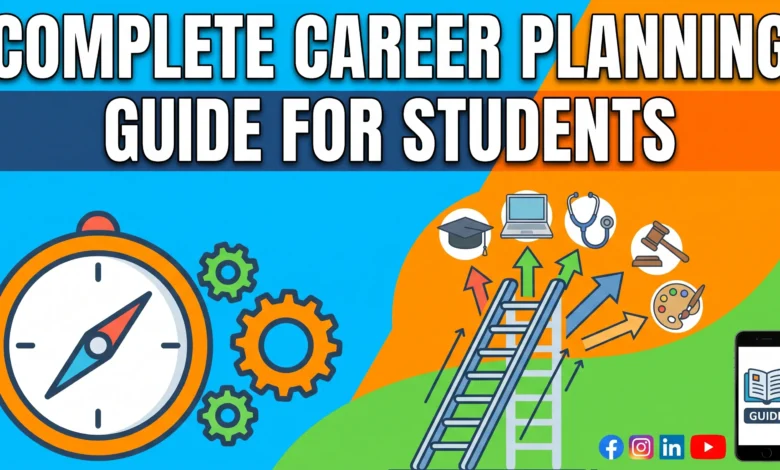
Choosing a career can feel overwhelming when you are still in school, college, or university. Students are often asked what they want to become before they have had enough opportunities to understand different professions, industries, workplaces, or even their own strengths.
A good career plan does not require you to predict exactly what you will be doing 10 or 20 years from now. Instead, career planning is about understanding yourself, exploring realistic options, developing useful skills, gaining experience, and making informed decisions as your interests and circumstances change.
The OECD describes career development as a lifelong process and emphasizes the importance of helping students understand themselves and the world of work while they are still in education. The International Labour Organization likewise provides career-development frameworks designed to help young people make informed choices about their professional futures.
This guide explains how students can build a practical career plan from their current stage of education through graduation and their first professional opportunities.
What Is Career Planning?
Career planning is the process of deciding where you want your education and professional development to lead and identifying the steps that can help you get there.
It can include:
- Understanding your interests and strengths
- Exploring different occupations
- Choosing appropriate subjects or degree programs
- Developing technical and transferable skills
- Finding internships or work-experience opportunities
- Building professional networks
- Creating a CV and online professional profile
- Preparing for job applications and interviews
- Considering further education
- Reviewing and changing your plan when circumstances change
Career planning is therefore more than simply choosing a job title.
A student who says, “I want to work in technology,” has identified a broad direction. A stronger plan might investigate software development, cybersecurity, data analysis, cloud computing, product management and other technology-related paths before deciding which area deserves deeper investment.
Why Students Should Start Career Planning Early
Career planning does not mean students have to choose a permanent profession at age 15 or 18.
Starting early simply gives students more time to explore.
The OECD’s research on teenage career preparation found that many students are uncertain about their future careers, while students’ job expectations can also be concentrated in a relatively small number of occupations.
Early career planning can help students:
- Make better-informed education choices
- Identify skills they need to develop
- Discover careers they may not have considered
- Gain relevant experience before graduation
- Understand employer expectations
- Avoid choosing a field solely because of social pressure
- Build confidence when applying for opportunities
The goal is not to eliminate uncertainty. It is to make uncertainty more manageable.
Step 1: Understand Yourself Before Choosing a Career
The first stage of career planning should be self-assessment.
Ask yourself:
What subjects do I enjoy?
Think beyond grades. A subject may be interesting because you enjoy solving problems, researching information, creating things, explaining concepts, or working with people.
What activities naturally attract my attention?
Consider activities outside formal education.
You might enjoy:
- Writing
- Designing
- Programming
- Organizing events
- Helping others
- Researching
- Building things
- Working with numbers
- Public speaking
- Photography
- Working with animals
- Experimenting with technology
These interests can provide clues about potential career environments.
What are my strengths?
Your strengths may include both academic and practical abilities.
For example:
- Analytical thinking
- Communication
- Creativity
- Mathematics
- Leadership
- Organization
- Problem-solving
- Research
- Teamwork
- Attention to detail
Do not assume that good career options are limited to your strongest school subject.
What type of work environment suits me?
Some people prefer structured workplaces. Others prefer flexible environments.
You may prefer:
- Working independently
- Working in teams
- Office-based work
- Practical work
- Laboratory environments
- Remote work
- Customer-facing roles
- Outdoor work
- Creative environments
Understanding your preferences can help you evaluate careers more realistically.
Step 2: Explore Careers Instead of Choosing One Immediately
Once you understand yourself better, research possible careers.
Do not rely only on social media videos or what friends and relatives tell you.
For every career you are considering, investigate:
- What does the job actually involve?
- What qualifications are normally required?
- What skills are important?
- What entry-level roles exist?
- What industries hire people in this field?
- What does the working environment look like?
- Are professional licenses required?
- What further education might be necessary?
- Are there opportunities in different countries?
- How could technology change the occupation?
The ILO’s career guidance resources similarly emphasize structured reflection when choosing a future profession rather than making decisions without exploring alternatives.
Create a simple career comparison sheet.
| Career | Education Needed | Key Skills | Work Environment | Experience Options |
|---|---|---|---|---|
| Software Developer | Degree or relevant training may help | Programming, problem-solving | Office/remote | Projects, internships |
| Graphic Designer | Portfolio and relevant training | Design, creativity | Studio/remote | Freelance, projects |
| Accountant | Relevant accounting education | Numbers, analysis | Office/hybrid | Internships |
| Nurse | Professional qualification | Clinical and communication skills | Healthcare | Placements |
| Marketing Specialist | Business/marketing background can help | Communication, analytics | Office/remote | Student projects |
Requirements vary by country, employer and occupation, so students should verify professional requirements before making major education decisions.
Step 3: Connect Your Education to Your Career Direction
Your education should support your career goals, but it does not have to determine your entire future.
For school students, this may involve choosing subjects that keep desired pathways open.
For university students, it may involve selecting:
- A major
- Minor or specialization
- Elective subjects
- Certifications
- Research projects
- Practical training
Before choosing a degree simply because it sounds prestigious, investigate where graduates actually use that education.
Ask:
What careers can this qualification realistically lead to?
Then ask:
What additional skills or experience will employers expect?
This second question is important because academic qualifications are only one part of career preparation.
Step 4: Build Skills Alongside Your Studies
One of the biggest mistakes students make is waiting until graduation to develop employability skills.
Start while you are studying.
Technical skills
Depending on your field, these might include:
- Programming
- Data analysis
- Accounting software
- Digital marketing
- Graphic design
- Research methods
- Laboratory techniques
- Engineering software
- Project management tools
Transferable skills
Almost every career can benefit from:
- Written communication
- Verbal communication
- Problem-solving
- Teamwork
- Time management
- Adaptability
- Critical thinking
- Professional communication
Recent OECD skills guidance emphasizes that career guidance should help students develop career-management and employability skills, including decision-making, goal-setting, opportunity searching and presenting themselves professionally.
You do not need to master everything.
Choose a small number of valuable skills and develop them consistently.
Step 5: Create Evidence of What You Can Do
A qualification tells an employer what you studied.
Evidence can show what you can actually do.
Students can build evidence through:
- Academic projects
- Personal projects
- Research
- Student societies
- Competitions
- Volunteer activities
- Freelance work
- Internships
- Open-source contributions
- Portfolios
- Community projects
For example, a computer science student could build a small application.
A marketing student could create a sample marketing campaign.
A design student could develop a professional portfolio.
A journalism student could publish original articles.
A business student could analyze a real company’s market strategy.
The objective is to turn knowledge into demonstrable ability.
Step 6: Get Real-World Experience
Classroom learning and workplace experience are different.
Whenever possible, look for opportunities that expose you to real professional environments.
These may include:
- Internships
- Part-time work
- Volunteering
- Job shadowing
- Research assistantships
- Student consulting projects
- Industry competitions
- Community projects
The OECD has highlighted workplace exposure and quality internships as useful components of career development because students can experience professional tasks and environments directly.
Experience does not always have to be paid to be valuable, but students should evaluate unpaid opportunities carefully and avoid arrangements that exploit their time or require unreasonable payments.
Step 7: Build a Professional Network While You Are a Student
Networking does not mean asking strangers for jobs.
It means developing professional relationships over time.
Start with:
- Teachers
- Professors
- Alumni
- Internship supervisors
- Researchers
- Industry professionals
- Professional associations
- Career advisers
- Student organizations
You can ask professionals questions such as:
What skills are most useful for someone entering this field?
Or:
What would you recommend a student learn before applying for entry-level positions?
These conversations can provide information that is difficult to obtain from job descriptions alone.
Step 8: Prepare Your CV Before You Need It
Do not wait until graduation week to create your CV.
Start with a basic version and update it as you gain experience.
A student CV can include:
- Name and contact details
- Education
- Relevant skills
- Projects
- Internships
- Work experience
- Volunteer activities
- Research
- Awards
- Certifications
- Languages
Keep the information relevant.
A long CV filled with unrelated activities is not necessarily stronger than a concise CV showing clear evidence of relevant skills.
Step 9: Develop an Online Professional Presence
Depending on your field, an online professional profile can help employers and professional contacts understand your background.
You might create:
- A LinkedIn profile
- A personal portfolio
- A GitHub profile
- An academic profile
- A design portfolio
- A professional website
Make sure your public information presents you professionally.
Your online presence does not need to look perfect. It should accurately communicate:
Who are you? What can you do? What are you learning? What type of opportunity are you interested in?
Step 10: Learn How to Search for Opportunities
Career planning becomes practical when you know where opportunities are found.
Students can search through:
- University career centers
- Employer career pages
- Government employment portals
- Professional associations
- Research institutions
- Internship platforms
- Scholarship databases
- Fellowship websites
- Graduate recruitment programs
- Professional networking platforms
The ILO’s job-search guidance recommends understanding the labour market, defining targets, preparing communication materials and using online resources as parts of an organized job-search strategy.
Always verify opportunities through the official organization or employer before submitting sensitive information or paying any fees.
Step 11: Consider International Opportunities
Students who want an international career can begin preparing before graduation.
Potential pathways include:
- International internships
- Study-abroad programs
- Research placements
- International fellowships
- Graduate programs
- Multinational companies
- International organizations
- Remote international work
However, international career planning requires additional research.
Consider:
- Work authorization
- Visa requirements
- Professional licensing
- Recognition of qualifications
- Language requirements
- Cost of living
- Employer expectations
- Country-specific recruitment practices
Never assume that a degree automatically provides the right to work in another country.
Step 12: Create Short-Term and Long-Term Goals
Instead of writing a vague goal such as:
“I want a successful career.”
Create measurable targets.
Six-month goal
Complete one relevant course and one practical project.
One-year goal
Obtain an internship, volunteer placement, research experience or other relevant experience.
Two-year goal
Build a stronger portfolio, professional network and application profile.
Graduation goal
Apply for relevant entry-level roles, graduate programs, fellowships or further study.
Your goals should change as you learn more.
A Simple Student Career Planning Framework
Use this five-part model:
Discover → Explore → Develop → Experience → Review
Discover
Understand your interests, strengths, values and preferences.
Explore
Research occupations, industries, qualifications and workplaces.
Develop
Build technical and transferable skills.
Experience
Gain practical exposure through projects, internships, volunteering or research.
Review
Evaluate your progress and adjust your direction.
This approach is more realistic than expecting students to choose one permanent career immediately.
Career Planning by Education Stage
Secondary School Students
Focus on:
- Exploring careers
- Understanding your strengths
- Developing foundational skills
- Talking to teachers and professionals
- Exploring subjects and education pathways
- Participating in extracurricular activities
You do not need a final career decision.
College and Undergraduate Students
Focus on:
- Choosing useful specializations
- Building technical skills
- Developing projects
- Finding internships
- Networking
- Research opportunities
- Creating your first professional CV
Final-Year Students
Focus on:
- Targeting employers
- Graduate programs
- Internships that can lead to employment
- Job applications
- Interviews
- Professional networking
- Further education
- International opportunities
Recent Graduates
Focus on:
- Entry-level employment
- Relevant experience
- Skills gaps
- Professional certifications where useful
- Building a stronger portfolio
- Expanding your professional network
Common Career Planning Mistakes Students Should Avoid
Choosing a Career Because of Family Pressure
Advice from family can be valuable, but students should also understand their own interests, abilities and goals.
Following Trends Without Research
A career that is popular online may not necessarily suit you.
Focusing Only on Salary
Income matters, but so do qualifications, working conditions, career progression, location, interests and long-term employability.
Waiting Until Graduation
Career preparation becomes easier when it happens gradually.
Collecting Certificates Without Building Skills
Certificates are useful when they support meaningful learning. They should not replace practical experience.
Ignoring Experience
Students sometimes focus entirely on grades while overlooking internships, projects, volunteering and other opportunities to demonstrate skills.
Believing There Is Only One Correct Career
Career paths can change.
A student may begin in one field and later move into another after discovering new interests or developing transferable skills.
What If You Still Don’t Know What Career You Want?
You are not necessarily behind.
Instead of asking:
“What career should I choose?”
try asking:
“What careers should I investigate next?”
Choose three to five possibilities.
Research each one.
Talk to people working in those fields.
Try related activities.
Develop introductory skills.
Then eliminate options that do not fit.
Career planning becomes easier when you treat it as a process of exploration rather than a single decision.
A 90-Day Career Planning Challenge for Students
Days 1–30: Discover
- List your strongest subjects
- Identify your interests
- Write down your transferable skills
- Research five careers
- Speak with at least one teacher, adviser or professional
- Identify skills required for your preferred career areas
Days 31–60: Develop
- Choose one relevant skill
- Start a course or structured learning plan
- Complete a small practical project
- Improve your CV
- Create or update your professional profile
Days 61–90: Experience
- Search for internships
- Explore volunteering
- Contact relevant organizations
- Attend career events
- Connect with professionals
- Apply for suitable opportunities
At the end of 90 days, review what you learned and create your next three-month plan.
Questions to Ask Before Choosing a Career
Before committing to a particular pathway, ask yourself:
- Do I understand what people in this career actually do?
- What education or training is required?
- Which skills are important?
- Have I tried any related activities?
- What type of workplace would I enter?
- Are there entry-level opportunities?
- Does this career fit my strengths?
- What alternative careers could use similar skills?
- What would I need to do next?
- Have I checked reliable information rather than relying on social media claims?
These questions can prevent students from making major decisions based on incomplete information.
Frequently Asked Questions
When should students start career planning?
There is no single correct age. Students can begin exploring interests and careers during secondary school and continue developing their plans throughout college or university. Early exploration does not mean making a permanent decision.
What if I choose the wrong career?
Career choices are not always permanent. Skills, experience and qualifications can often support transitions into related fields. Regularly reviewing your goals can make career changes easier.
Is a university degree necessary for a successful career?
Not for every occupation. Some careers require university education, while others may be accessible through vocational education, apprenticeships, professional training, certifications or practical experience. Requirements vary significantly by occupation and country.
Should students prioritize passion or job opportunities?
Neither should automatically dominate. A sensible decision considers interests, strengths, skills, working conditions, education requirements and realistic employment opportunities.
How can students gain experience without a job?
Projects, volunteering, research, student organizations, competitions, internships and community activities can all provide useful experience depending on the field.
Should students plan an international career before graduation?
They can. Students interested in international opportunities should research qualifications, language requirements, work authorization, internships, employers and country-specific requirements early.
How often should a student review their career plan?
A practical approach is to review it every few months, particularly after completing a course, internship, project or major educational milestone. Your plan should evolve as you gain information.
Final Thoughts
A strong student career plan is not a prediction of your entire professional life.
It is a working roadmap.
Start by understanding yourself. Explore several careers instead of immediately committing to one. Connect your education with the skills employers need. Build evidence through projects and practical experience. Develop professional relationships. Learn how to search for opportunities. Then review your progress and adjust your direction.
The world of work continues to change, which makes career planning an ongoing process rather than a one-time decision. The OECD’s recent work on career development and skills emphasizes the value of starting guidance early and continuing it throughout education, while the ILO provides practical frameworks for helping young people navigate career choices and transitions.